
Cherokee County Criminal Docket Searches
The Cherokee Clerk calls its public product the Docket Feature. Search options include Case #, Party Name, Alias, Citation number, and system wide search. Results can list parties, court dates, the assigned judge, and overall posture. A plus sign beside the case number expands the docket. Keep in mind the screen is a convenience display, not the full criminal case file.
Match the court category to the case before you search. A county misdemeanor or traffic matter usually sits in State Court. A felony sits in Superior Court. A warrant or first appearance sits in Magistrate Court. City citations belong to the municipal court that issued them. If the first attempt comes up empty, the official instructions recommend a last-name-first party search.
These steps keep a Cherokee County criminal docket lookup tied to the local record path:
- Open the Clerk's Docket Feature and select Criminal Search or the category that matches the case.
- Enter the case number, party name, alias, citation number, or system wide search choice shown for that category.
- Try Last Name, First Name if the case number does not locate the matter.
- Open the matching result with the green additional-information control or the plus sign beside the case number.
- Compare the visible setting or disposition with the current clerk, judge notice, or complete file before relying on it.
Current contact details and criminal routing information come from the official Cherokee State Court contact page. That page lists how the court routes criminal case questions.
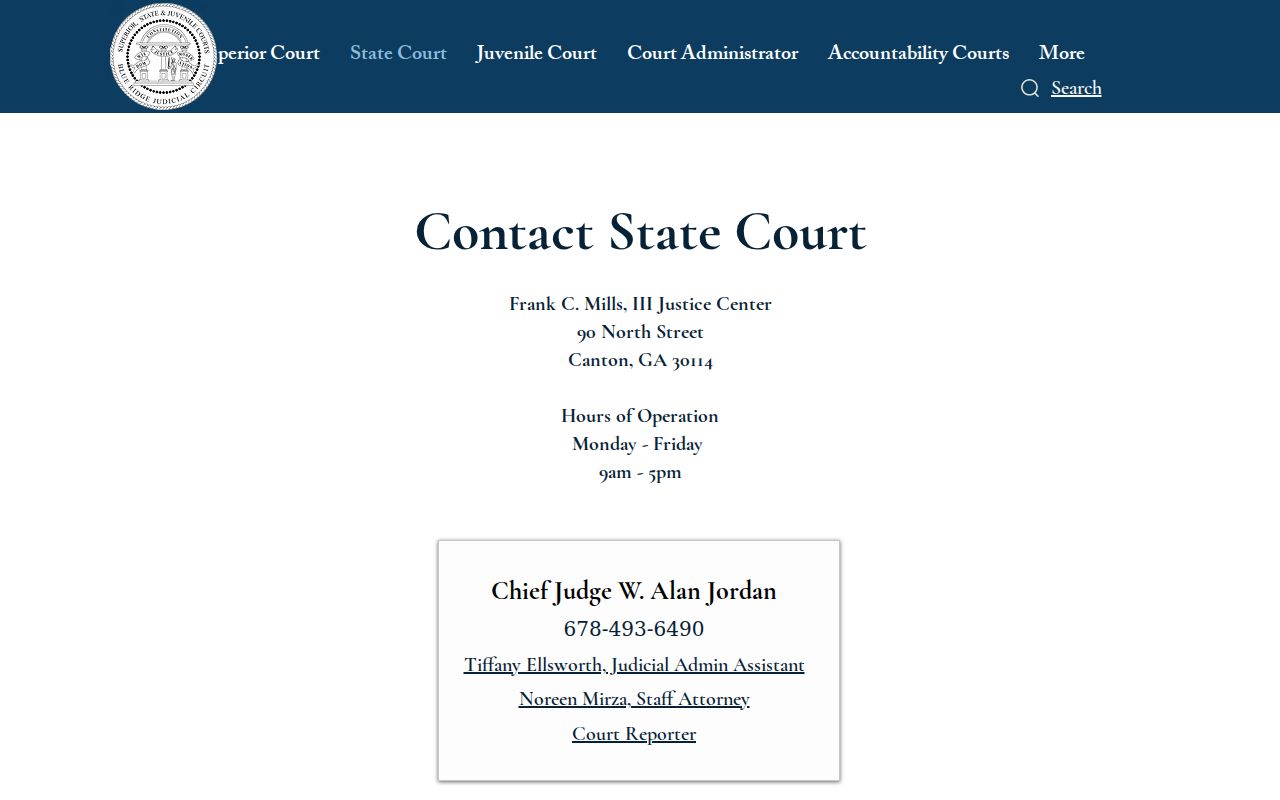
State Court points pending and closed case questions to the Clerk of Courts Criminal/Traffic department. For a fuller walkthrough of the controls, use the Cherokee County Docket Search route.
Cherokee Criminal Search Fields
Each field on the criminal search form does one job. Case # is the clerk's identifier. Party Name reaches the indexed person in the case. Alias covers an alternate name. Citation number can track down a criminal or Magistrate matter, though it does not prove that a city payment portal and the county Clerk portal hold the same record. System wide search widens whichever path you picked.
The official instructions also list Search and Clear controls. A green result control opens more case information, and the Docket Feature expands a docket through a plus sign next to the case number. No fixed set of charge, document, or result columns is promised, so read the result as a starting point.
| Field or control | Use in Cherokee criminal search | What it does not establish |
|---|---|---|
| Case # | Searches the clerk-assigned identifier, shown as Case #. | The public instructions do not publish one universal Cherokee format. |
| Party Name | Searches an indexed party. Last Name, First Name is the official fallback tip. | A name match alone does not prove identity or case outcome. |
| Alias | Provides an alternate-name search choice. | It does not replace the case number or clerk file. |
| Citation number | Searches the citation identifier when that category supports it. | A city ticket may be held by a municipal clerk instead. |
| System wide search | Broadens the selected criminal search according to the official instructions. | It is not a statewide or federal search. |
| Plus or green control | Expands a found case or additional information. | It does not reveal every sensitive pleading or certify a document. |
If a result does not appear, adjust one thing at a time. Check the court category first. Then try the party-name format, ask the Clerk's criminal department, or visit the public terminal.
Criminal Dockets: What They Show
Think of a criminal docket as the case's running log. It can carry the charge or charging instrument, settings, pleas, motions, disposition, sentencing, and later probation-revocation or compliance entries. Courts and case types vary the exact sequence. One docket line may point to a separate document. Such a document might be an indictment, accusation, plea packet, waiver, order, or judgment.
“Disposed” or “closed” is a status, not a copy of every document. An arraignment is a court event. A disposition records an outcome or closure. A plea answers the charge. A setting is only a scheduled event, and it can be continued or reset later.
| Case number | The clerk identifier used to retrieve the criminal matter and request a document. |
|---|---|
| Charge or instrument | An accusation, indictment, presentment, or other charging entry described in the case record. |
| Settings | Arraignment, pretrial, motion, trial, sentencing, revocation, or other scheduled events. |
| Plea | The defendant's response, such as guilty, not guilty, or nolo contendere, when recorded. |
| Disposition | The recorded outcome, which may include dismissal, conviction, sentence, or another closure event. |
| Documents | Orders, judgments, exhibits, transcripts, and plea or waiver forms that sit behind docket entries. |
The docket tells you what event was recorded. For the official document behind that entry, use the Clerk's copy process.
Cherokee Felony and Misdemeanor Dockets
Cherokee County Superior Court sits in the Blue Ridge Judicial Circuit. It alone holds felony criminal jurisdiction. Its criminal docket can include indictment or presentment, accusation, arraignment, plea, trial, sentencing, and probation-revocation or related post-judgment entries. The Superior Court Clerk's Office provides the adult filing and records route for those cases.
State Court takes every misdemeanor and traffic criminal case filed with the Clerk. Magistrate Court handles warrants. It also covers preliminary criminal proceedings, initial appearances and bail, ordinance trials, and search or arrest warrants. Municipal courts handle city traffic, ordinance, and misdemeanor matters within their statutory authority. That is why one citation or name may need more than one official route.
The Superior Court Clerk's Office page explains the court's exclusive felony jurisdiction.
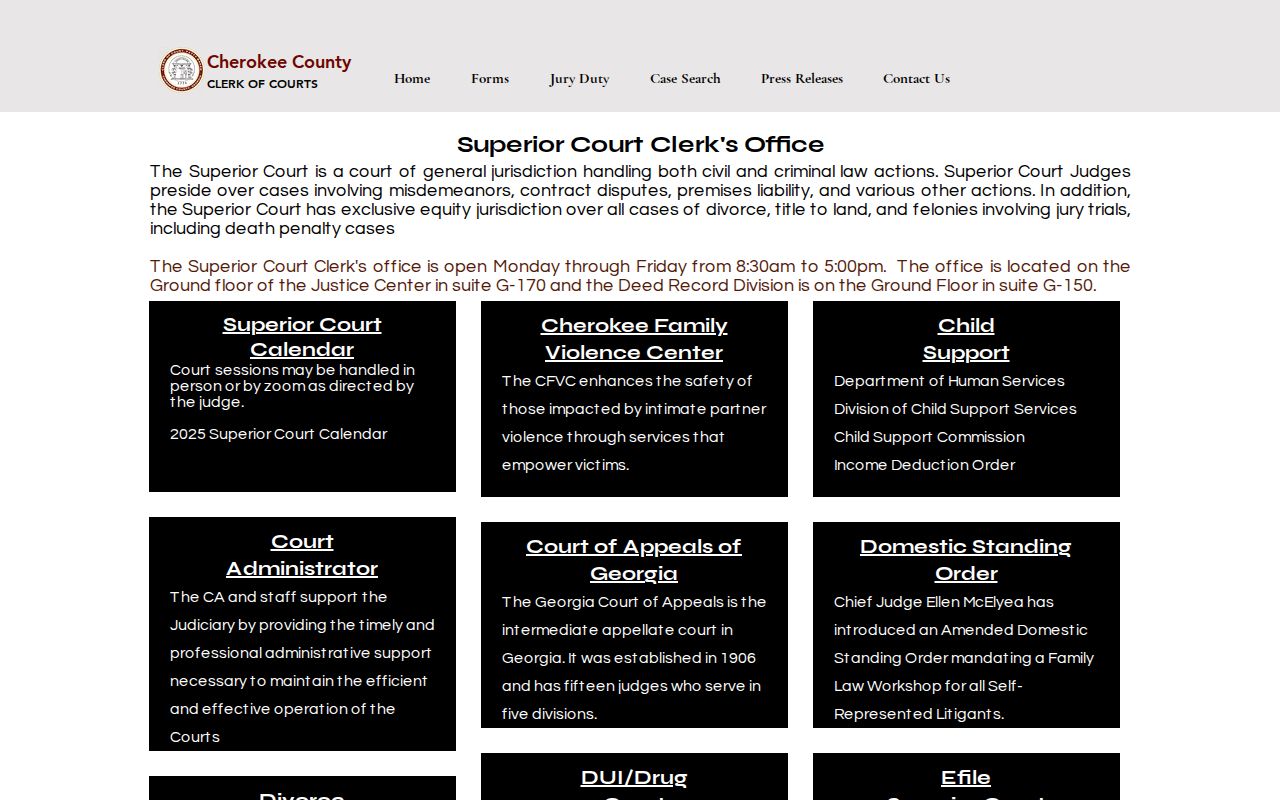
Superior Court is the main general-jurisdiction trial court. Even so, a misdemeanor or county traffic docket usually starts in State Court.
| Court | Criminal work | Clerk or access route |
|---|---|---|
| Superior Court | Felony criminal cases and post-judgment activity. | Superior Criminal department at 678-493-6508 or the Clerk's Docket Feature. |
| State Court | Misdemeanor and traffic criminal cases. | State Criminal/Traffic department at 678-493-6550. |
| Magistrate Court | Warrants, initial appearances, bail, and ordinance trials. | Magistrate department at 678-493-6431. |
| Municipal Court | City-issued traffic, ordinance, and misdemeanor matters. | Issuing city clerk and citation instructions. |
Federal criminal cases go through the Northern District of Georgia and PACER, not a Cherokee County criminal docket search.
Criminal Case Stages on the Docket
Not every case hits every stage. A warrant or citation may lead to an initial appearance and bail activity. A felony can move through indictment or presentment. An accusation may serve in an appropriate criminal case. Arraignment settles the charge, the plea, and process status. After that come pretrial settings, motions, a negotiated plea or trial, disposition, sentencing, and later supervision entries.
Docket flow: Charge or Warrant → Initial Appearance → Indictment or Accusation → Arraignment → Pretrial → Plea or Trial → Disposition and Sentence
The public calendar leans on shorthand. Labels like Arr, CRNJ, CR Rev, PAC, HOLDOVER, and JURY TRIALS mark a setting or a court block, and that is all they do. They are not the docket entry itself. Nor are they the order or the charging document. A plea packet or a jury-waiver form is paper sitting behind a single docket line. When the legal effect of an event matters, ask the Clerk for the order, judgment, or other filed document instead of trusting the shorthand.
Cherokee Criminal Terms: Arr, Plea, Trial
Cherokee's calendar shorthand is local, since the official calendar sample and clerk materials give terms broad meanings that can pick up extra calendar context. Start with the event displayed. Check the complete docket or ask the calendar clerk. For rule text, the current Georgia rules and the local court page remain the proper sources.
The Supreme Court of Georgia rules page posts those current rules, so it stands behind anything a summary paraphrases.
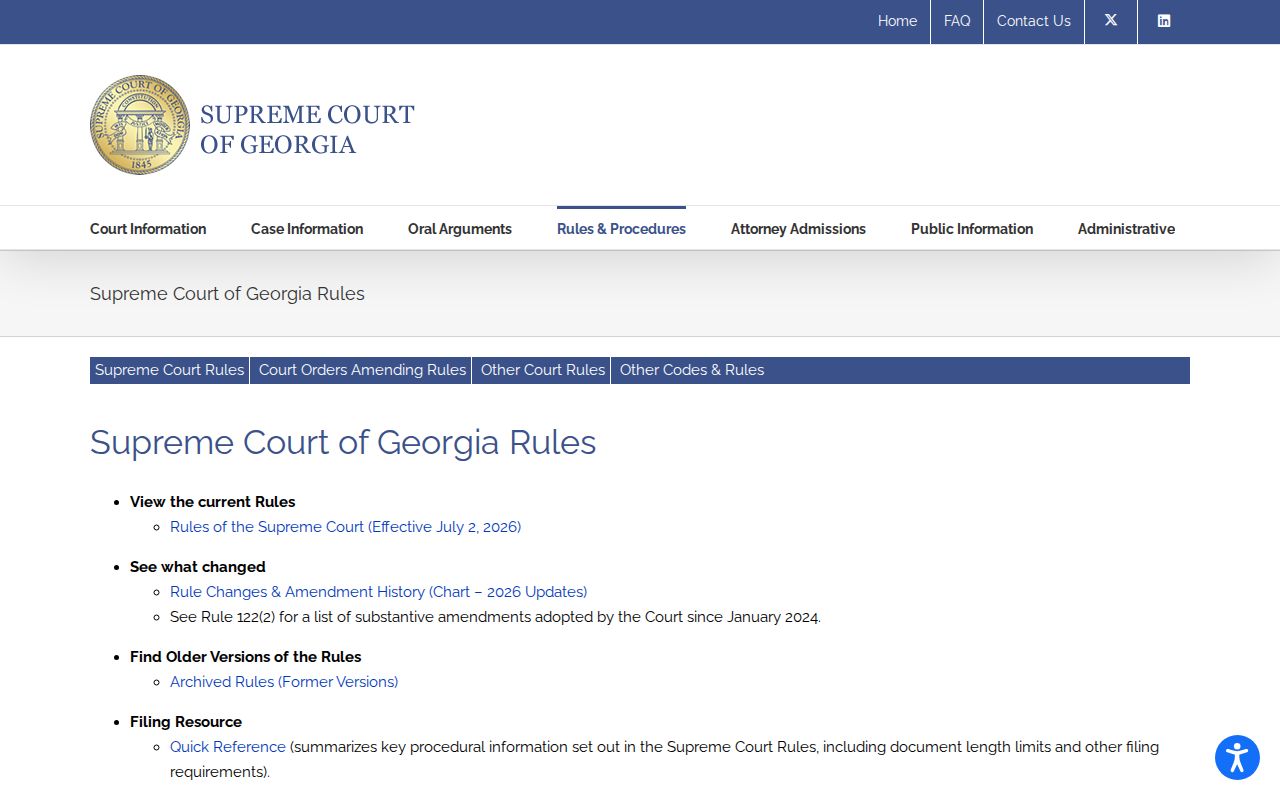
Rules frame access. Still, a case-specific docket entry and the filed document are what show what actually happened in a particular matter.
- Arraignment
- A criminal court event at which the charge and plea or process status are addressed.
- Indictment
- A felony charging instrument returned by a grand jury.
- Accusation
- A charging instrument used in appropriate criminal cases.
- Presentment
- A grand-jury charge brought on the grand jury's own initiative, as described in the county glossary.
- Plea
- The defendant's response to a charge, including a no-contest plea where allowed.
- Disposition
- The outcome or closure event recorded for the criminal case.
A term names the event. The reason behind it may stay hidden, so read the docket and the filed document together.
Cherokee County Criminal Docket Courts
The Clerk of Courts holds the adult criminal records for Superior, State, and Magistrate, each through a separate department. Match the department to the court. The name of the person is not the route. Current Superior contacts list courtrooms 2A through 2D, along with separate criminal calendar clerk lines. State Court posts its own judges. Case-information questions there go to the Clerk's State Court Criminal/Traffic line. Magistrate Court covers warrant and initial-appearance work around the clock, though ordinary counter requests follow posted office hours.
The main Clerk line is 678-493-6511. Superior Criminal is 678-493-6508, State Criminal/Traffic is 678-493-6550, and Magistrate is 678-493-6431. Public terminals and complete-file requests are available at Suite G-170 in the Justice Center.
The current Blue Ridge Superior Court contacts identify the present courtrooms and calendar routes.
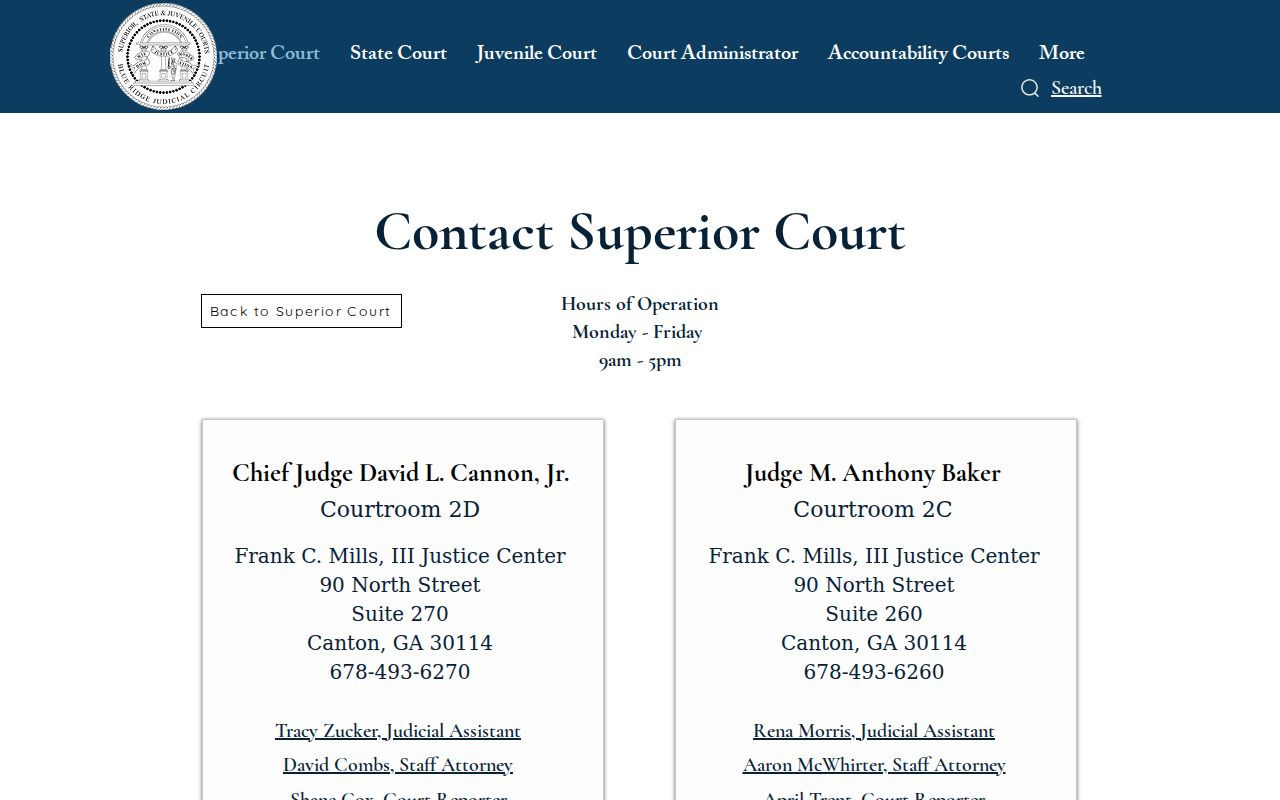
Calendar questions go to the judge's current clerk or Court Administration. Document questions belong with the Clerk of Courts records department.
Superior Criminal
Felony filings, charges, pleas, sentences, and related entries
678-493-6508
State Criminal and Traffic
County misdemeanor and traffic criminal matters
678-493-6550
Magistrate
Warrants, initial appearances, bail, and ordinance activity
678-493-6431
The Cherokee MUST SEE JUDGE Path
A traffic citation can land on the criminal docket and still demand a court appearance. Cherokee State Court flags one type in particular. Citations written by Georgia State Patrol or the Cherokee Sheriff after a traffic accident may be marked MUST SEE JUDGE. The appearance date on the citation controls. That type cannot be paid online, the county says. A citation missing online means little. The State Court Clerk advises calling 678-493-6550 once processing time has passed. Georgia Courts also cautions that no single centralized traffic-citation database exists, and vendor availability can take 7 to 21 business days after issuance. A city citation may belong in municipal court instead.
The State Court Clerk's criminal and traffic page posts the notice and the department route.
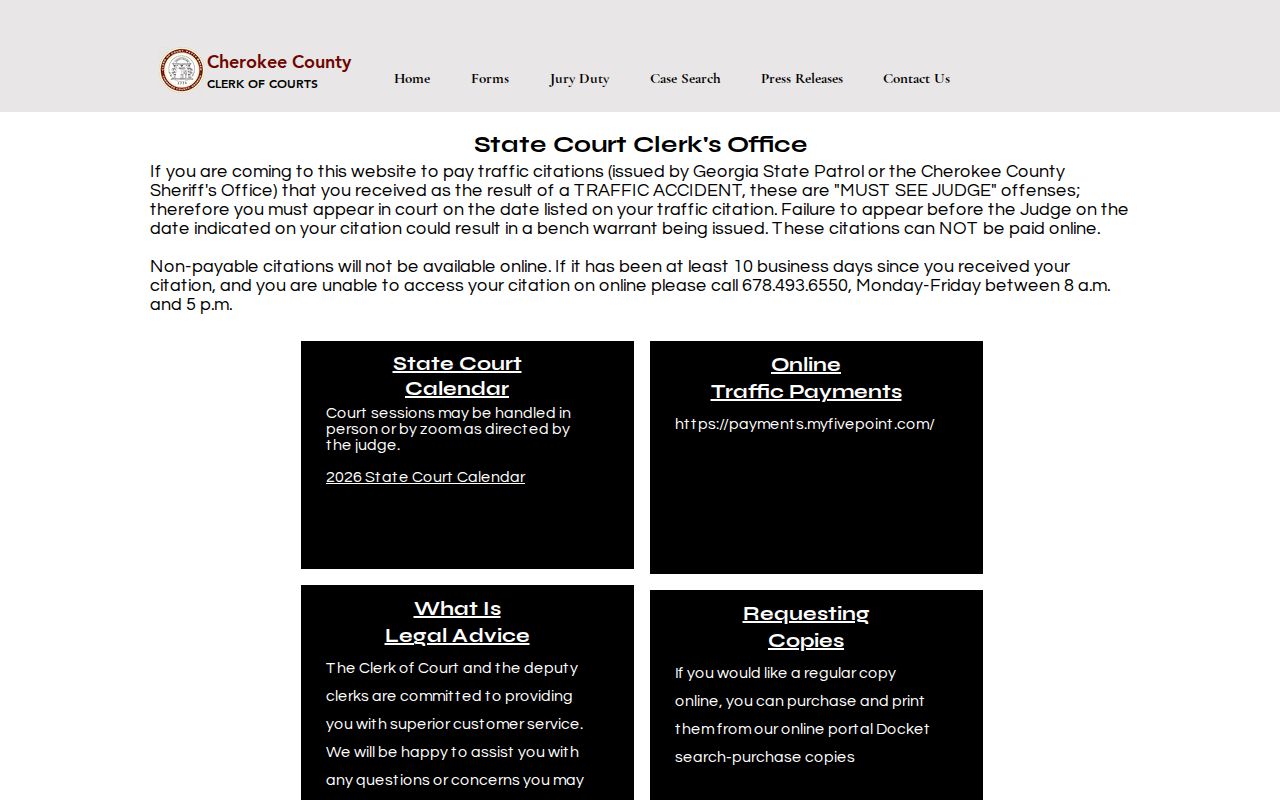
Paying online settles less than people hope. A portal payment never replaces a required appearance, a continuance instruction, or a clerk-confirmed court date.
If the citation says MUST SEE JUDGE: preserve the citation, use the court's official contact route, and do not treat an unavailable payment button as permission to skip the stated appearance.
Cherokee Criminal Docket Versus Jail Records
A court docket is not a jail record. Nor is it a police or sheriff file. The Clerk of Courts holds the court case register for Superior, State, and Magistrate matters, along with the filings, orders, settings, pleas, dispositions, and copy requests. A booking file stays with the agency that created it. The same goes for incident reports and custody records. A city citation may sit with a municipal clerk, while a federal case sits with a federal clerk.
A criminal docket can mention an arrest, a warrant, or a citation without holding every law-enforcement record behind it. It may also show a disposition while keeping a report or a sensitive pleading out of view. Name the office that holds the record. Name the record itself. The county Open Records route does not turn a Clerk-held case file into a county administrative record.
Want a filed order, judgment, or docket document? Use the Justice Center public terminal, the matching Clerk department, or the mail copy process. Police or jail record? Ask the agency that created it.
Access Rules for Criminal Dockets
Georgia leans toward public inspection and copying. Access still has limits. Cherokee's online notice warns that hidden pleadings may hold sensitive information and stay blocked from Internet viewing. Juvenile delinquency, CHINS, and juvenile traffic records follow a separate access structure. Sealed or protected filings answer to the governing rule or order. An online gap is not proof of sealing. A sealed case is not a failed search either.
Missing a document? Collect the case number, document title, and date, then ask the Clerk whether in-person review or an authorized request is available. A certified copy comes from the clerk that maintains the record. Federal matters go through PACER and the Northern District of Georgia. The adult county Docket Feature remains a local convenience search.
Key rules:
Georgia Open Records Act, O.C.G.A. §§ 50-18-70 through 50-18-72 supplies the public inspection and copying baseline, subject to exemptions and court orders.
O.C.G.A. § 9-11-7.1 is named in the Clerk's filing form for protected-identifier redaction.
Uniform Superior Court Rule 21.6 addresses protected information and filing-under-seal procedures.
Cherokee Juvenile Court forms identify separate sealing, access, transcript, and recording routes for juvenile records.
The Clerk's online display, the clerk-held file, and a certified copy are three different levels of access. Pick the one that answers your actual question.